
Journal
Reflections: On Experiencing Architecture
The Present
When we talk about the experience of architecture, we are essentially discussing the time spent in a space. This time does not refer to merely being physically present in a space but one’s senses being engaged by one’s surroundings in that very present moment, the now. Sight, scent, sound, touch and yes, even taste, help us perceive the present physicality of space, but time frames that perception, bridging it with past and future nows. This framing is what allows us to associate emotion with space. Bachelard touches on this when he describes how certain architectural elements, like the cozy corners of a home or the secluded nooks of a room, create a sense of safety and presence, allowing individuals to feel rooted in the moment. This experience of the present is one where a space resonates with one’s consciousness, and is possible only through sensory perceptions of physical space.
Expression of Time
Architecture has the ability to, within itself, contain and transport pockets of time spanning years, decades, or even centuries. De Botton elaborates on how architectural styles evolve, and how the revival of past styles brings a sense of continuity and respect for history. He explores the idea that buildings tell stories about the times in which they were built, reflecting the changing values and aspirations of society. This notion of time is crucial in understanding the ability of architecture to create a sense of belonging and identity.
Expression of time through buildings can be understood through different lenses. The materials used in a building can age in ways that reveal time. The weathering of materials, at times intentional, can showcase their resilience and the environmental conditions they have endured over the years. The historical layers in a city speak of the past, where new buildings are built alongside the old. In the case of Lahore, we have a rich history of various eras where Hindu, Mughal, Sikh and colonial buildings exist alongside the modern, postmodern and contemporary buildings we build today. Add to this, symbolic representations in the form of memorials and monuments, which speak of events or times by now etched in the city’s collective memory.
Architecture is a vessel of time, regardless of its use or purpose. Through the aging of materials, the layering of historical eras, the endurance of symbols, narrative design and ephemeral structures, buildings express the passage and experience of time in various profound ways. These expressions not only enhance our understanding of architecture but also deepen our emotional and sensory engagement with the spaces we inhabit.
Time, Memory and Perception
The relationship between time and memory in architecture is richly explored by writers such as Merleau-Ponty, Bachelard and Federico De Matteis, each offering a unique perspective that also encompasses perception. Merleau-Ponty emphasizes the embodied experience, where our perception of space is deeply intertwined with our temporal existence. He argues that architecture serves as a vessel for personal and collective memories through sensory interactions, suggesting that how we perceive and experience spaces is shaped by the passage of time and our own bodily engagement with the environment.
Bachelard, in The Poetics of Space, delves into how intimate spaces like the home become repositories of personal memories. He posits that physical structures act as mnemonic devices, evoking and containing past experiences through their sensory qualities. For Bachelard, perception is closely linked to memory; the way we perceive and interpret spaces can trigger vivid recollections and emotional responses.
Federico De Matteis expands on these ideas by viewing memory in architecture as performative and embodied. He suggests that spaces not only preserve past events but also engage the body and senses in a dynamic interaction between memories and present experiences, showing how modern memorials, for example, use spatial and sensory elements to evoke emotional responses.
Together, these perspectives highlight the profound interplay between architecture, time, memory and perception, underscoring how spaces shape and are shaped by our temporal, mnemonic and perceptual experiences.
Transparency and Reflection
Transparency in architecture has dramatically evolved, particularly with the extensive use of glass in modern and postmodern buildings. Historically, transparency in classical architecture was limited to smaller windows or decorative elements, offering minimal insight into interiors.
Modern architecture revolutionized this with expansive glass facades that created a sense of floating and openness. Iconic examples include the Seagram Building (1958) by Ludwig Mies van der Rohe and Philip Johnson, which used glass to achieve a sleek, light appearance.
Post-modern and contemporary architecture further advanced this concept. Glass facades now reflect their surroundings during the day, blending seamlessly with the environment. As dusk falls, the building’s interior lights turn on, transforming the glass into a reflective portal that reveals the interior while still mirroring the exterior. At night, the glass facade becomes a transparent screen, showcasing the interior in detail. This evolution highlights how glass in architecture mediates between the inside and outside, creating a dynamic interplay of light and reflection.
Reflections
Man’s fascination with reflection is as old as history itself. Reflection, originating early from Latin, can be understood as a phenomenon involving just the physical manifestations, or through its more serious and thoughtful interpretation of looking beyond the visual realm.

Narcissus falls in love with his own reflection.
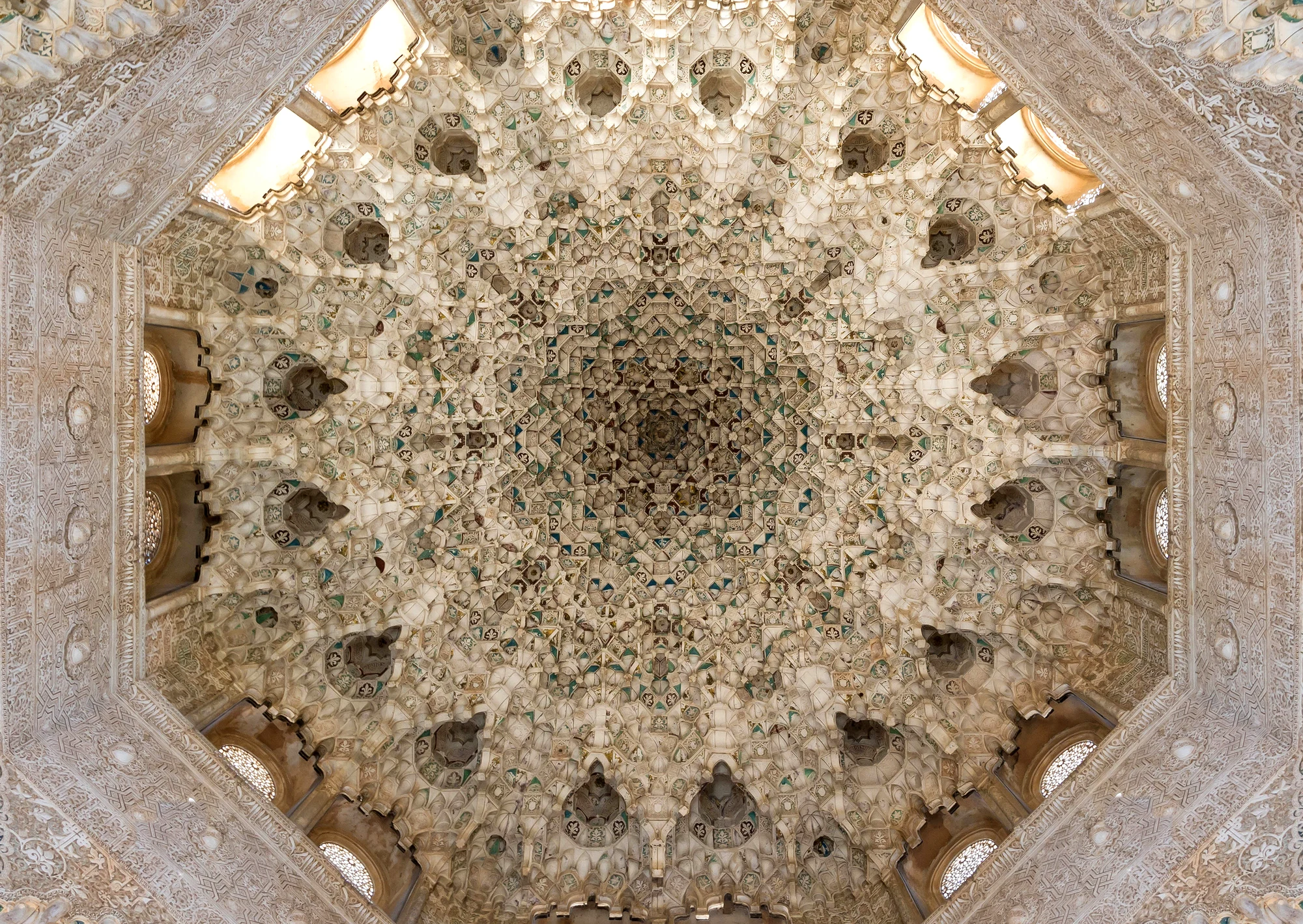
Man built wonders reflecting the celestial kingdom of the heavens on earth.
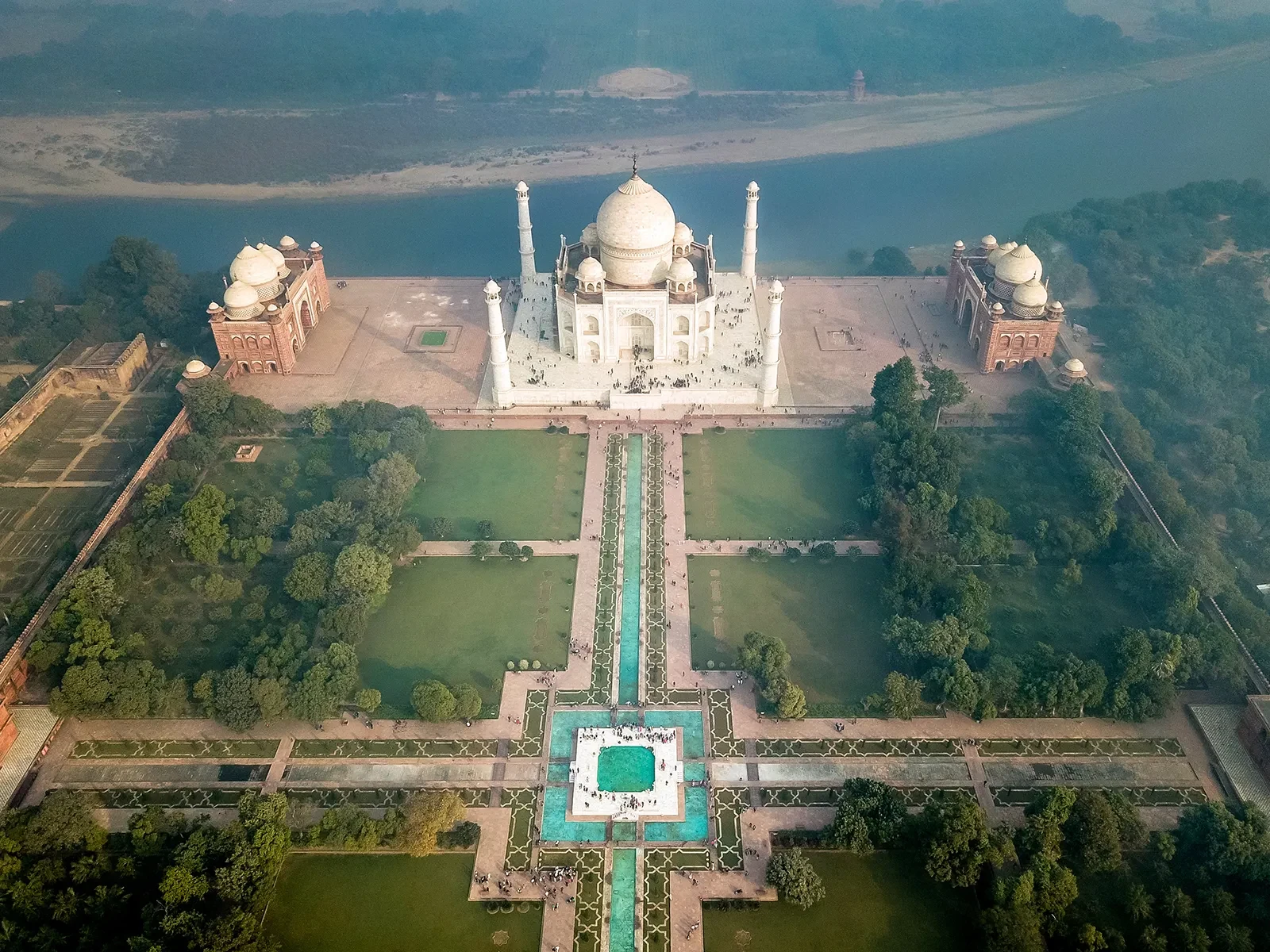
Shah Jahan reflects the mosque of the Taj Mahal and calls it the “Jawab Mosque.”
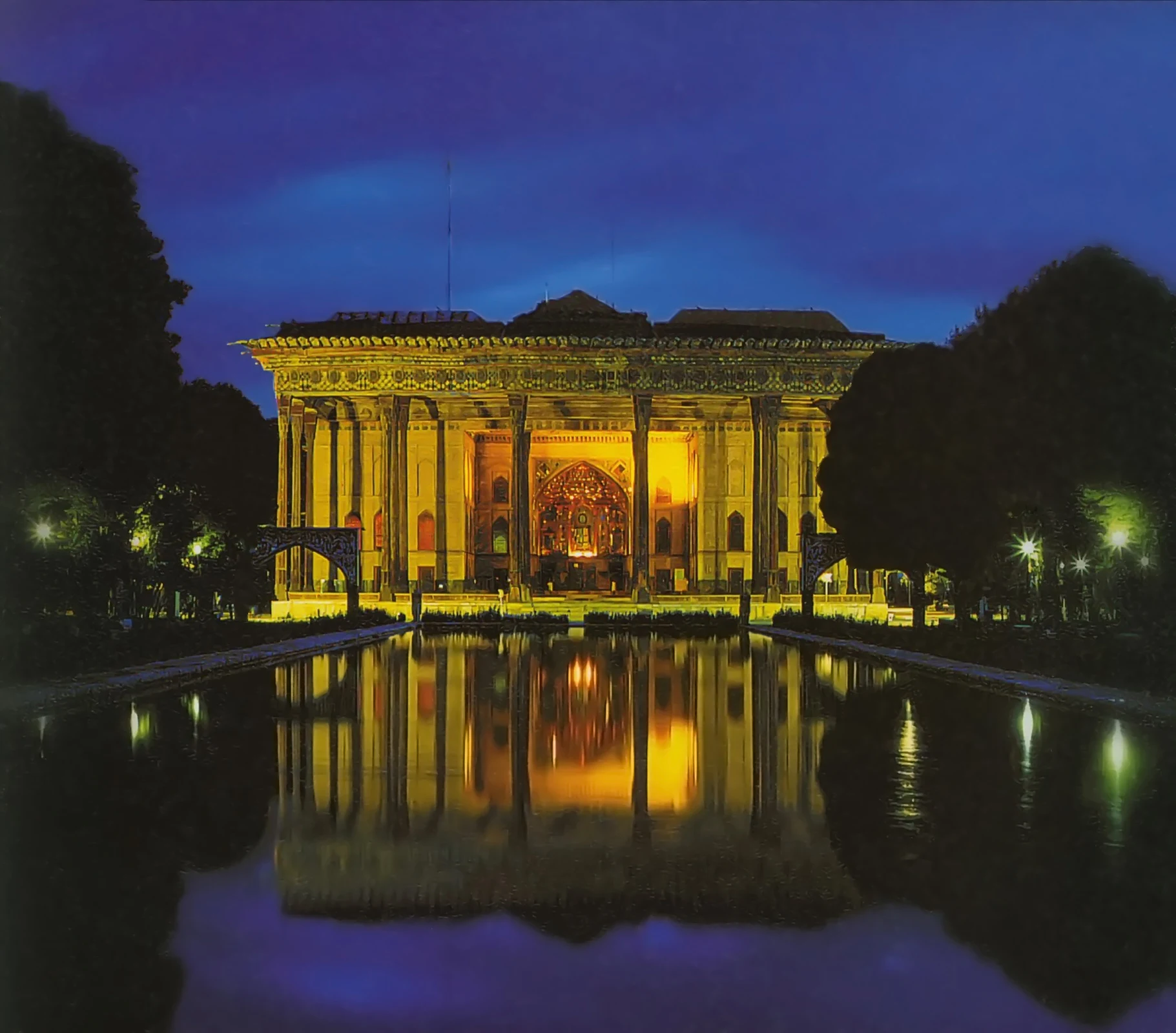
A palace is named Chehel Sotoun, meaning Forty Columns, for reflecting its twenty columns in the water pond.
Experiencing architecture not only involves the perception of space at a given time, but also our reflection of that space, which catalyses in our memory, sustaining and enriching its essence. The experience becomes free of time.
We can no longer draw an absolute distinction between space and the things which occupy it, nor indeed between the pure idea of space and the concrete spectacle it presents to our senses. Our relationship to space is not that of a pure disembodied subject to a distant object but rather that of a being which dwells in space, relating to its natural habitat.
Merleau-Ponty, The World of Perception
The space we observe through our sight is not how our minds perceive it. Instances and fragments of our experiences reflect in our mind, not just what we see but what we feel. The essence of a space in architecture can leave a lasting impact on us.
Memory, however, creates a special relationship with space, holding on to the essence of it, the best and the worst, letting the rest of the details fade into gray.
Eleni Bastéa (ed.), Memory and Architecture
Case Study 1: Beaconhouse National University
Designed by Nayyar Ali Dada and Associates.
Beaconhouse National University (BNU) in Lahore is a prominent institution that features a blend of contemporary and traditional architectural elements, creating an inspiring environment for learning and creativity.
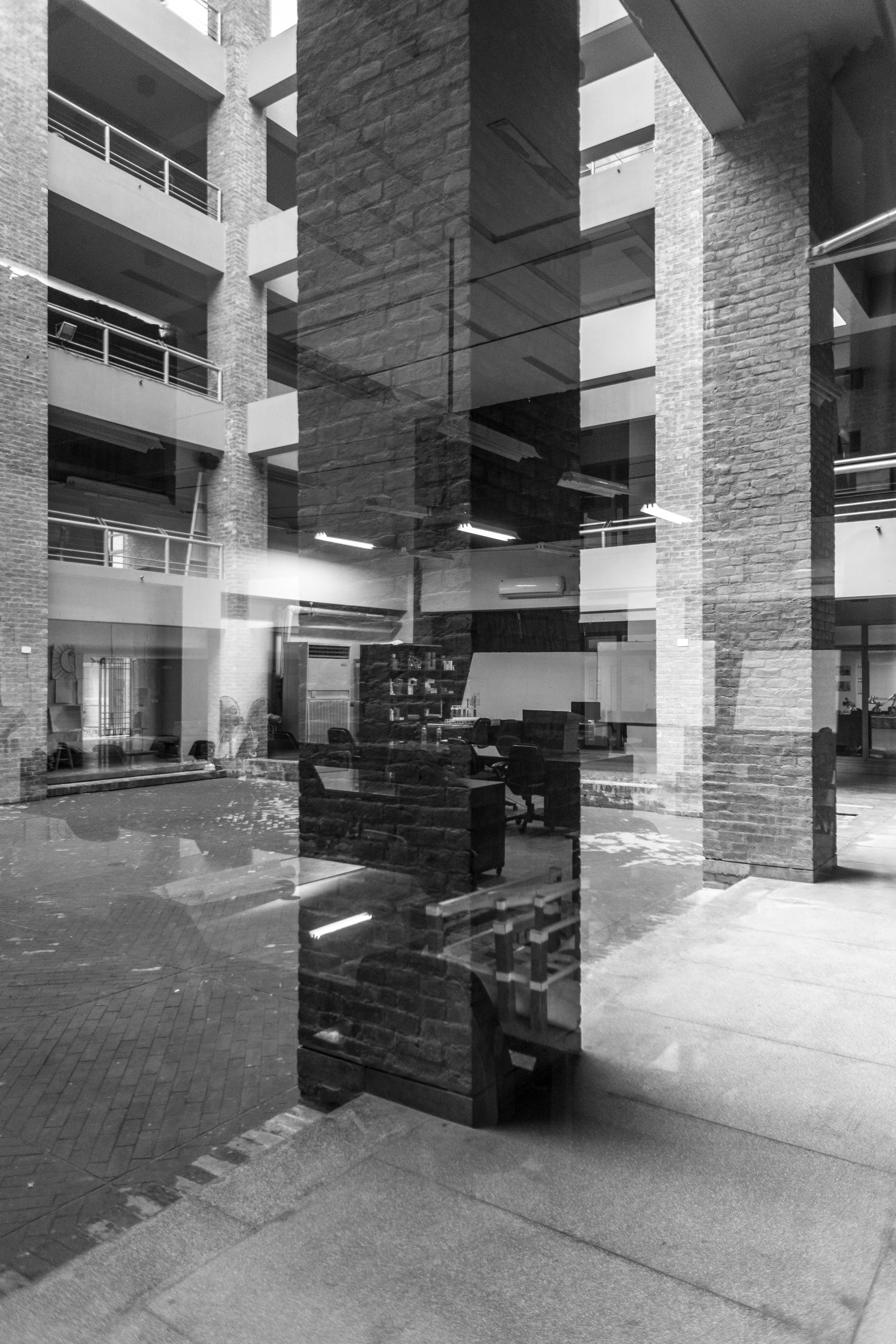
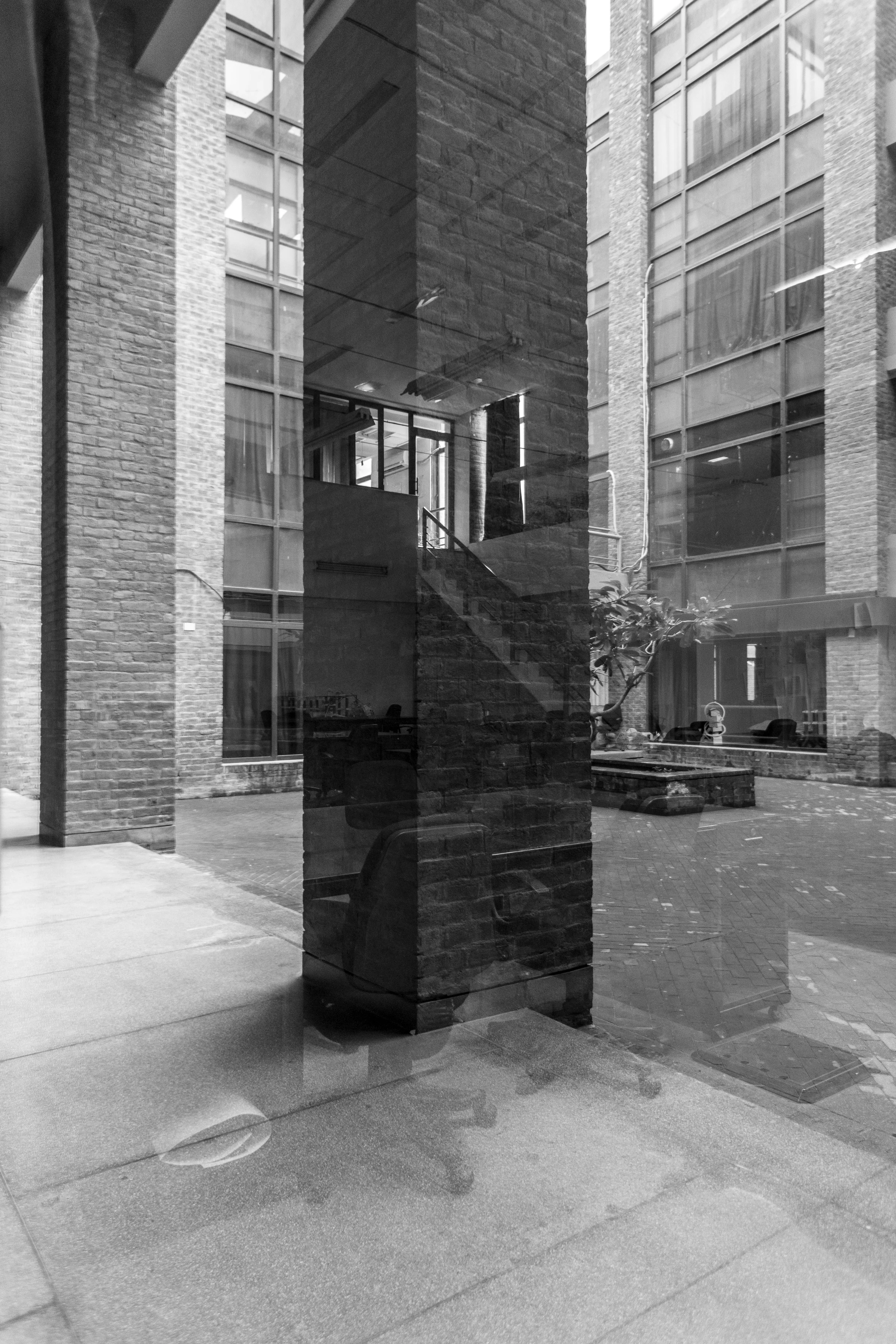
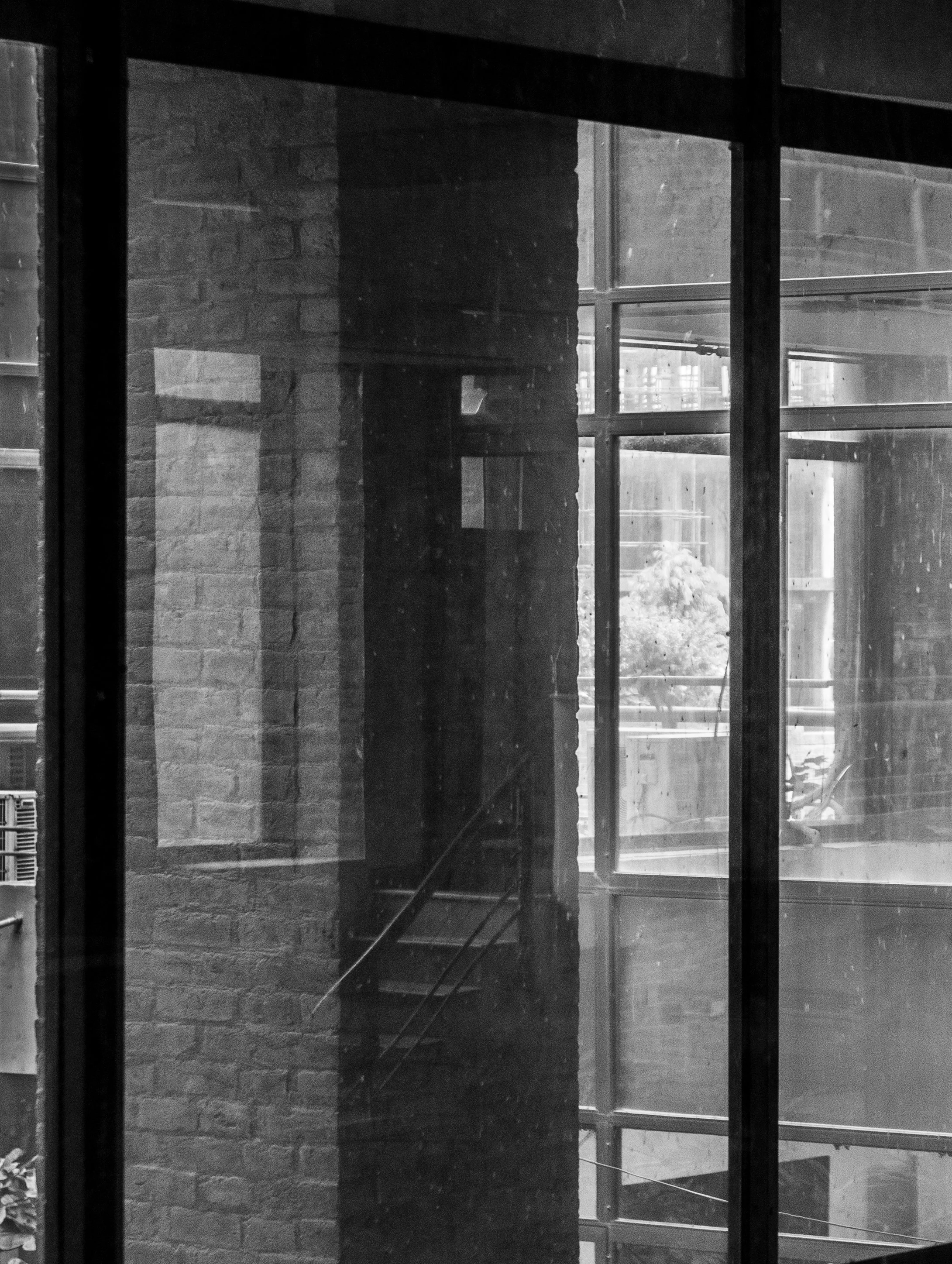
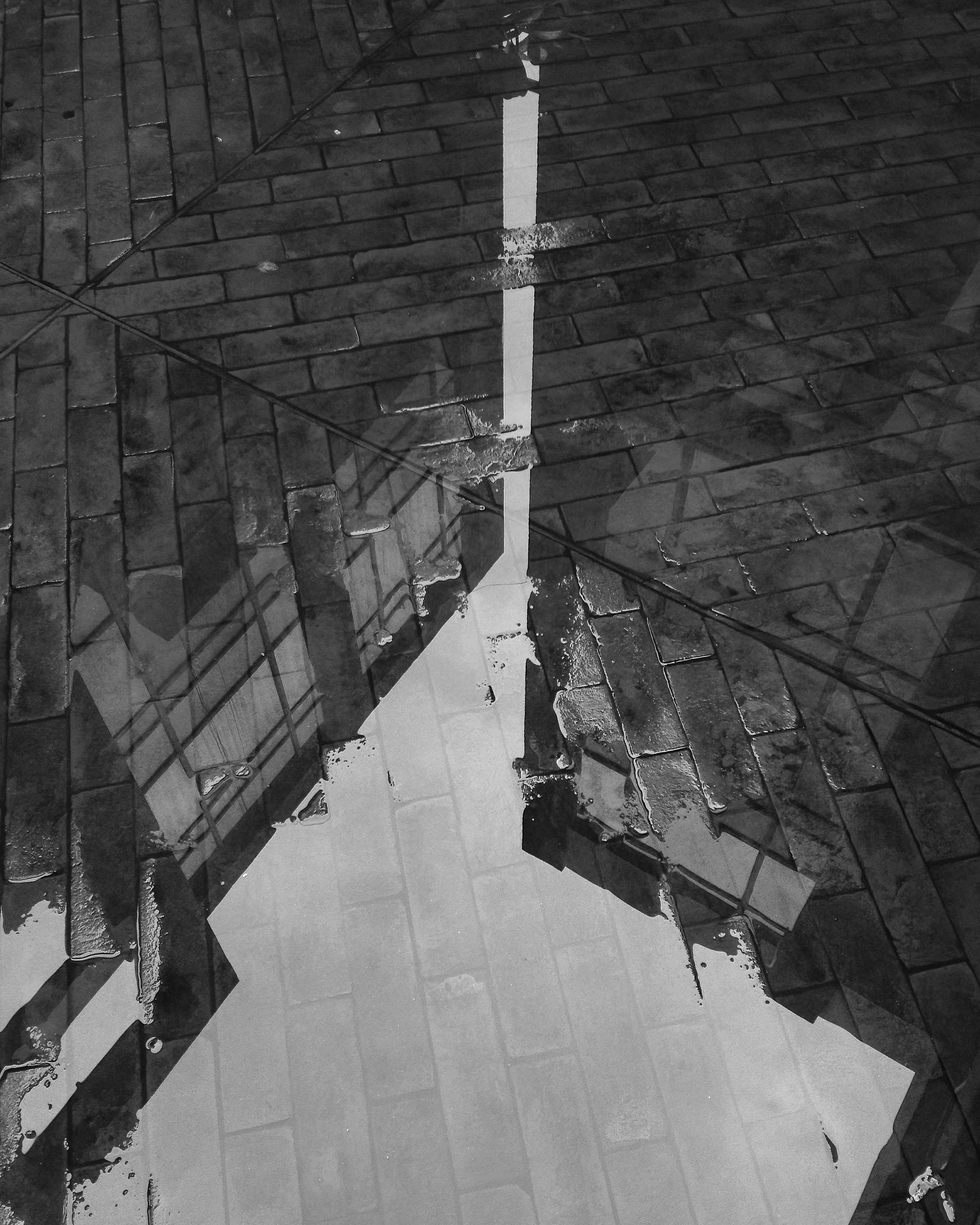
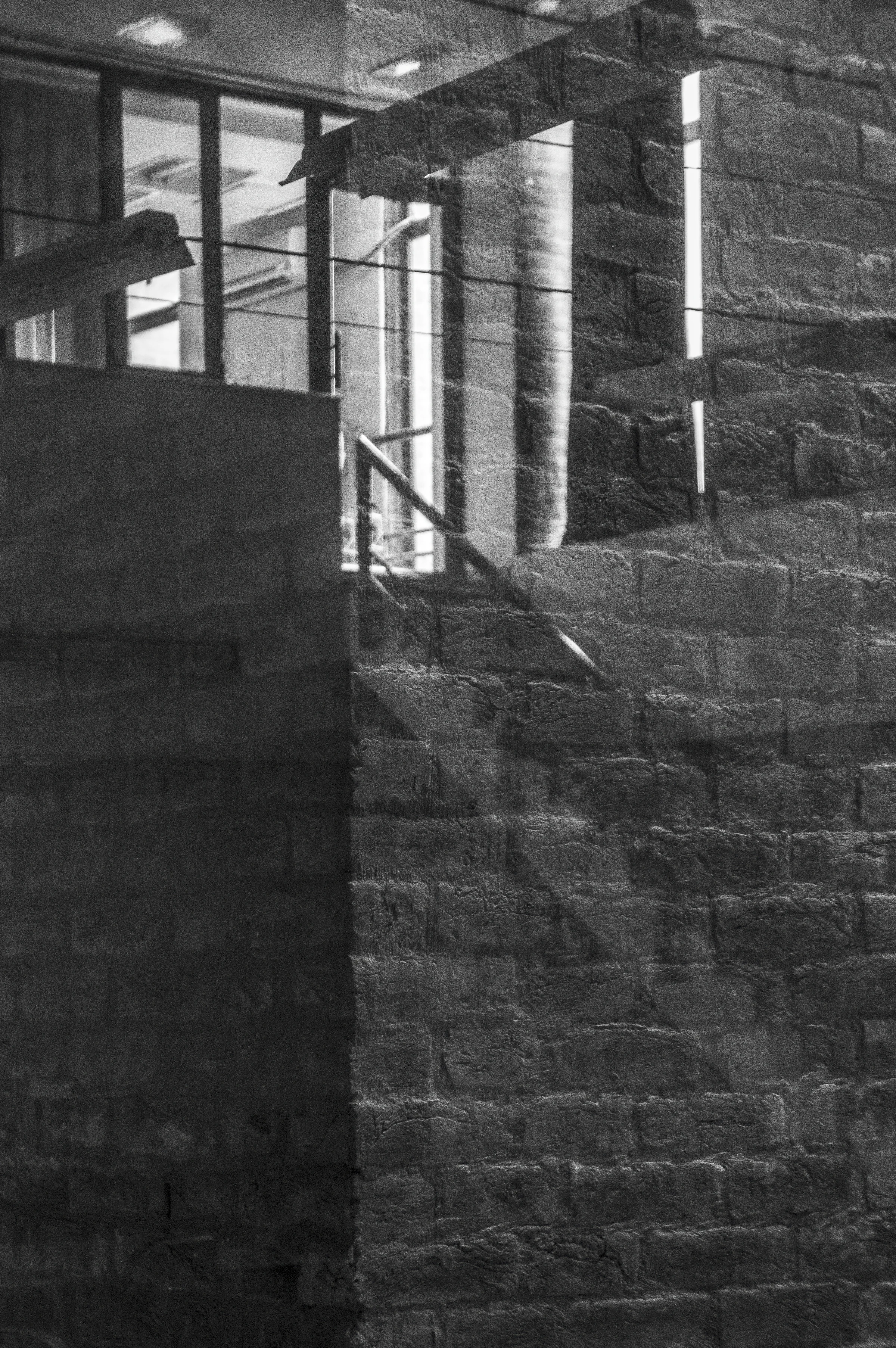
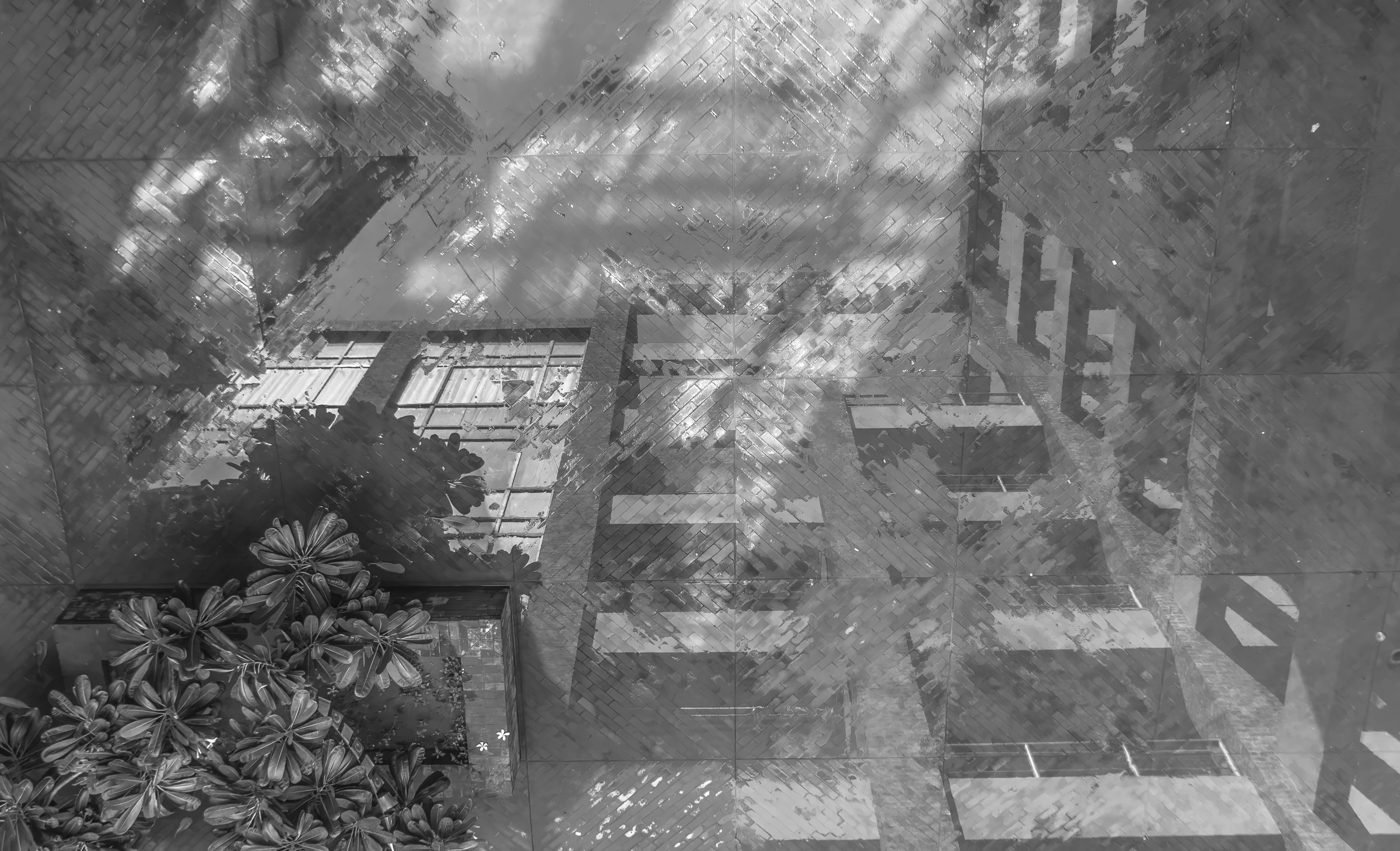
The architecture of BNU employs large glass and brick facades that create a dynamic interplay of reflections, adding another dimension to the experience of the space. These reflections open portal-like visuals, merging interior and exterior environments. After it rains, water collects in the courtyard to transform it into a horizontal mirror, creating unexpected depth and integrating surrounding elements. This seamless blend produces ephemeral experiences that deeply affect the spatial perception and emotional engagement of its inhabitants, creating lasting impressions in their memories.
Case Study 2: ANK Residence
Designed by Nayyar Ali Dada and Associates.
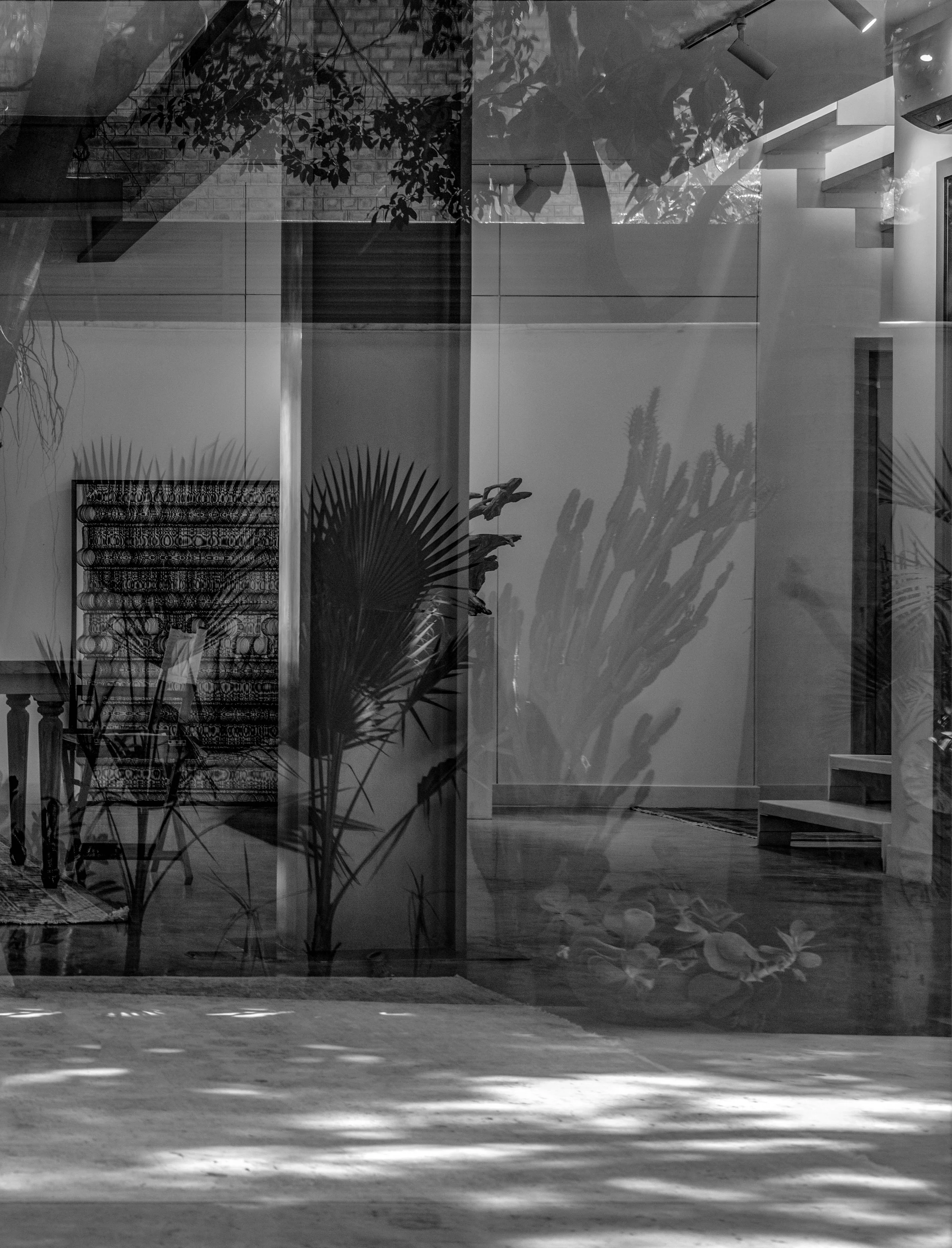
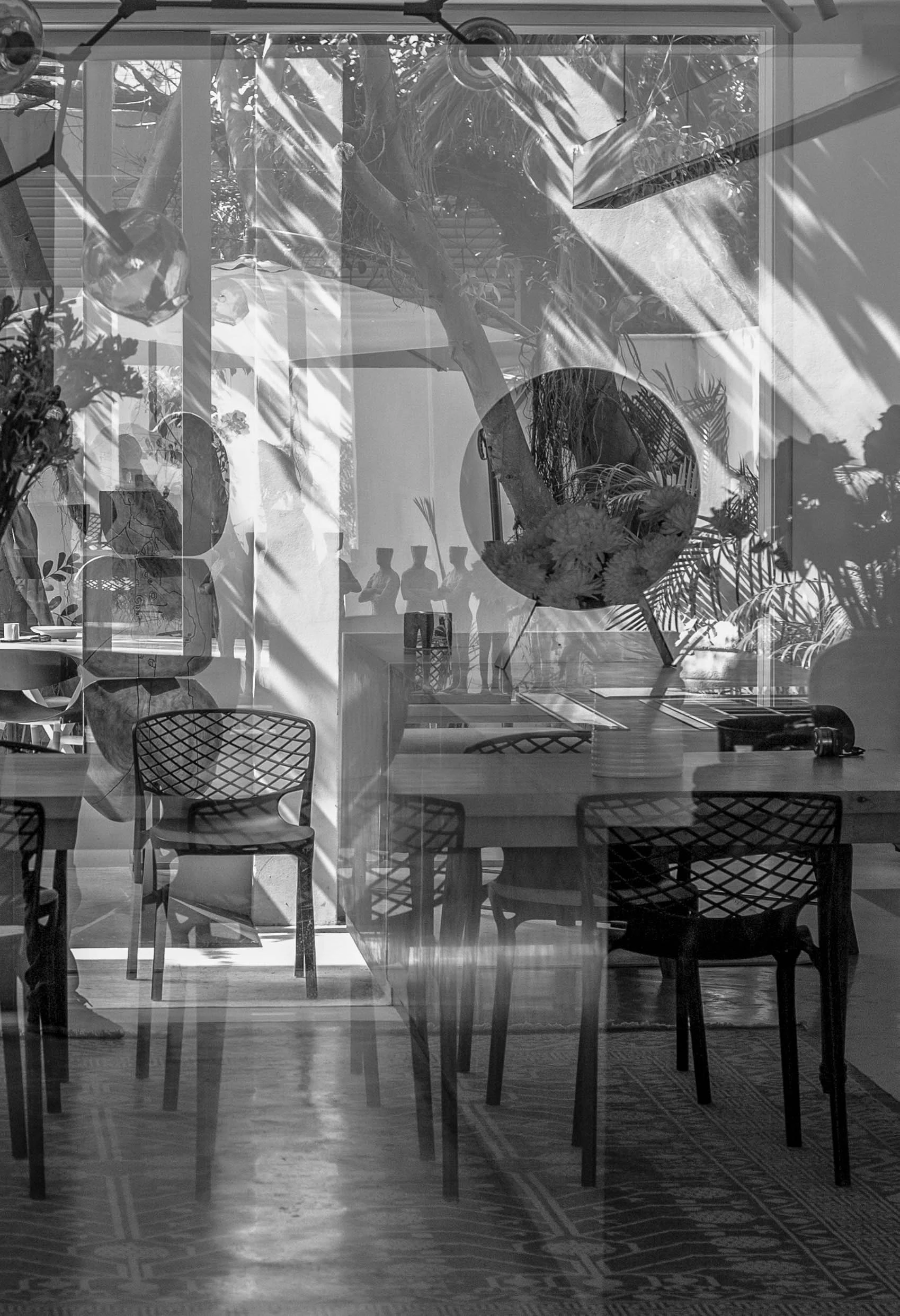
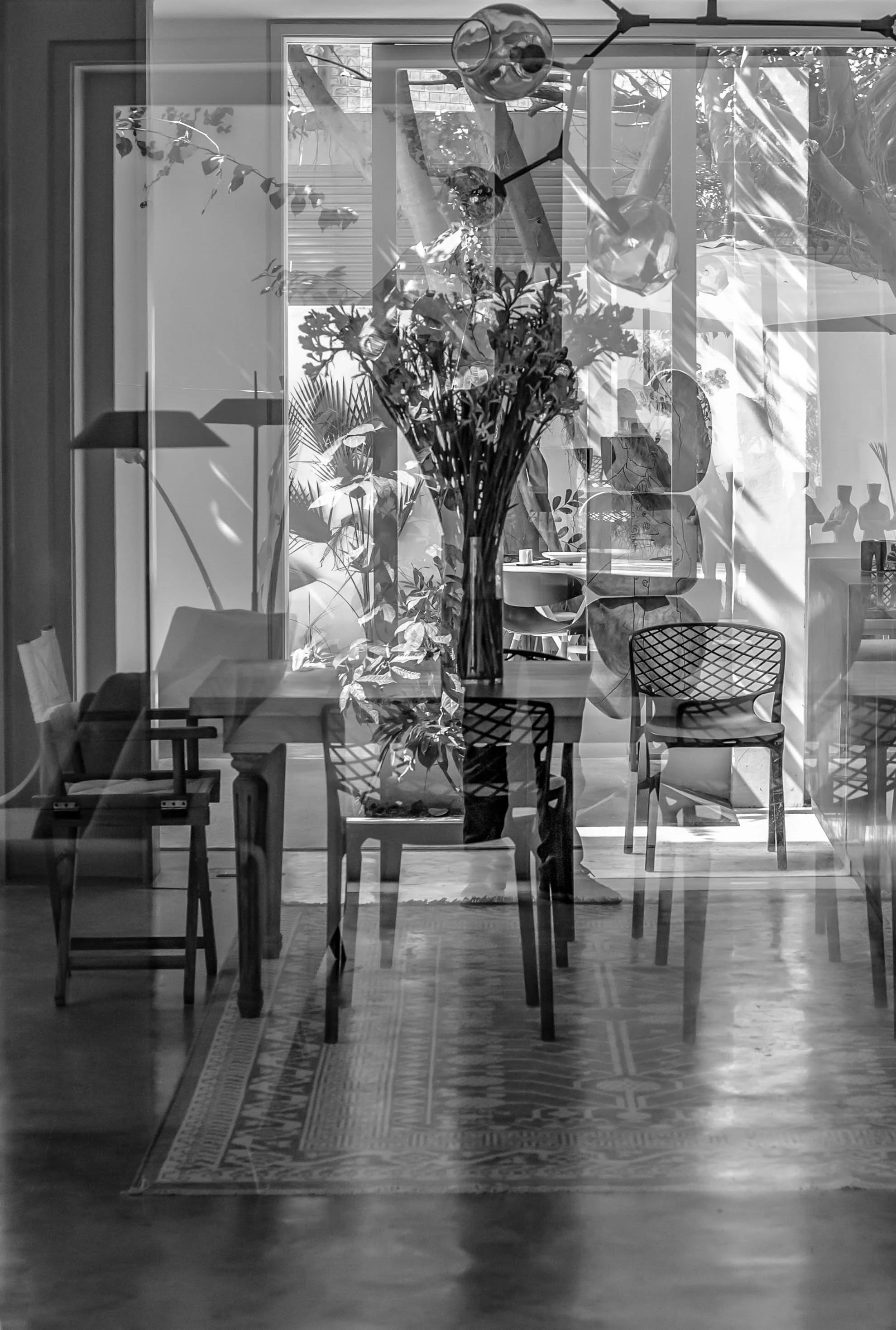
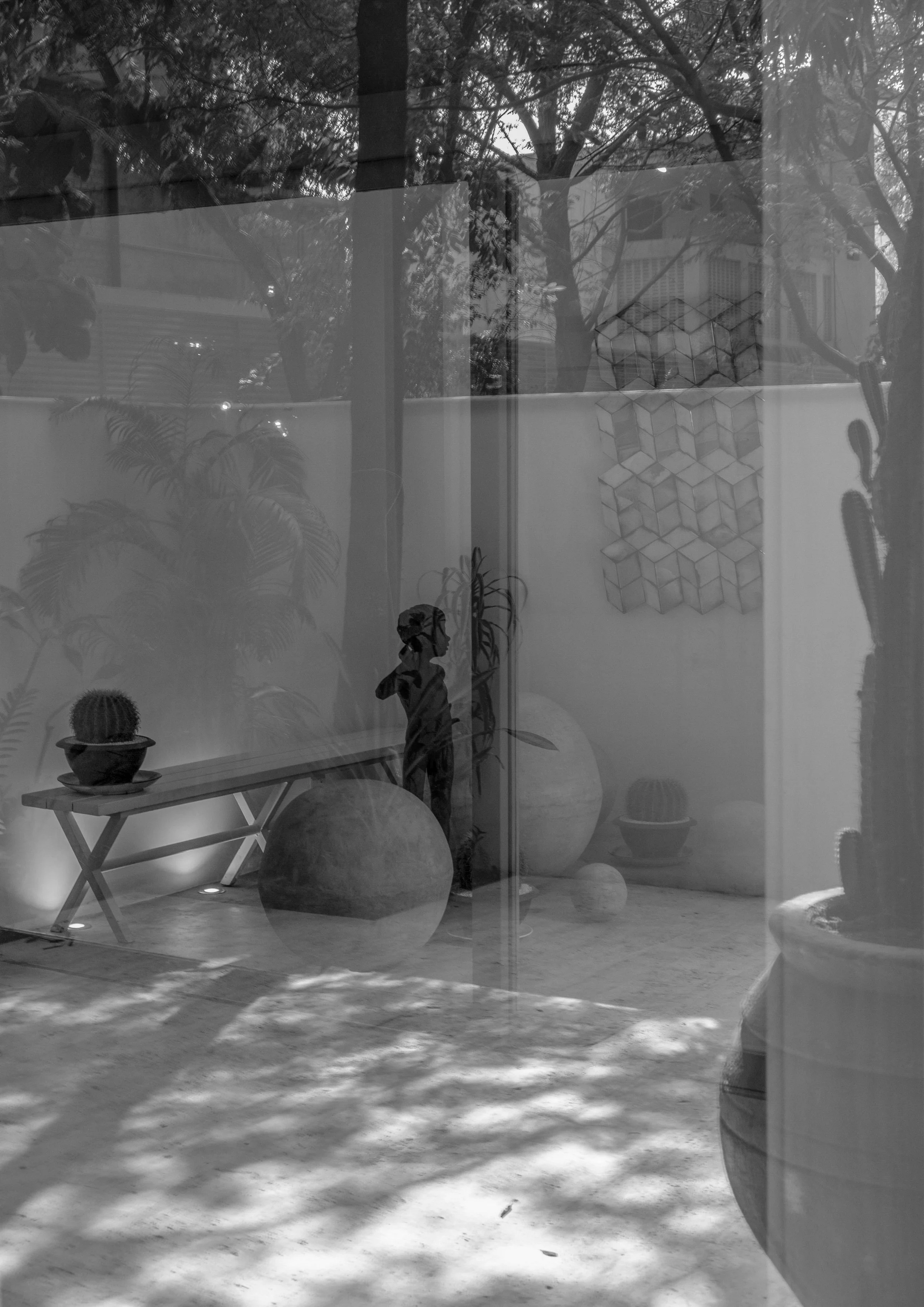
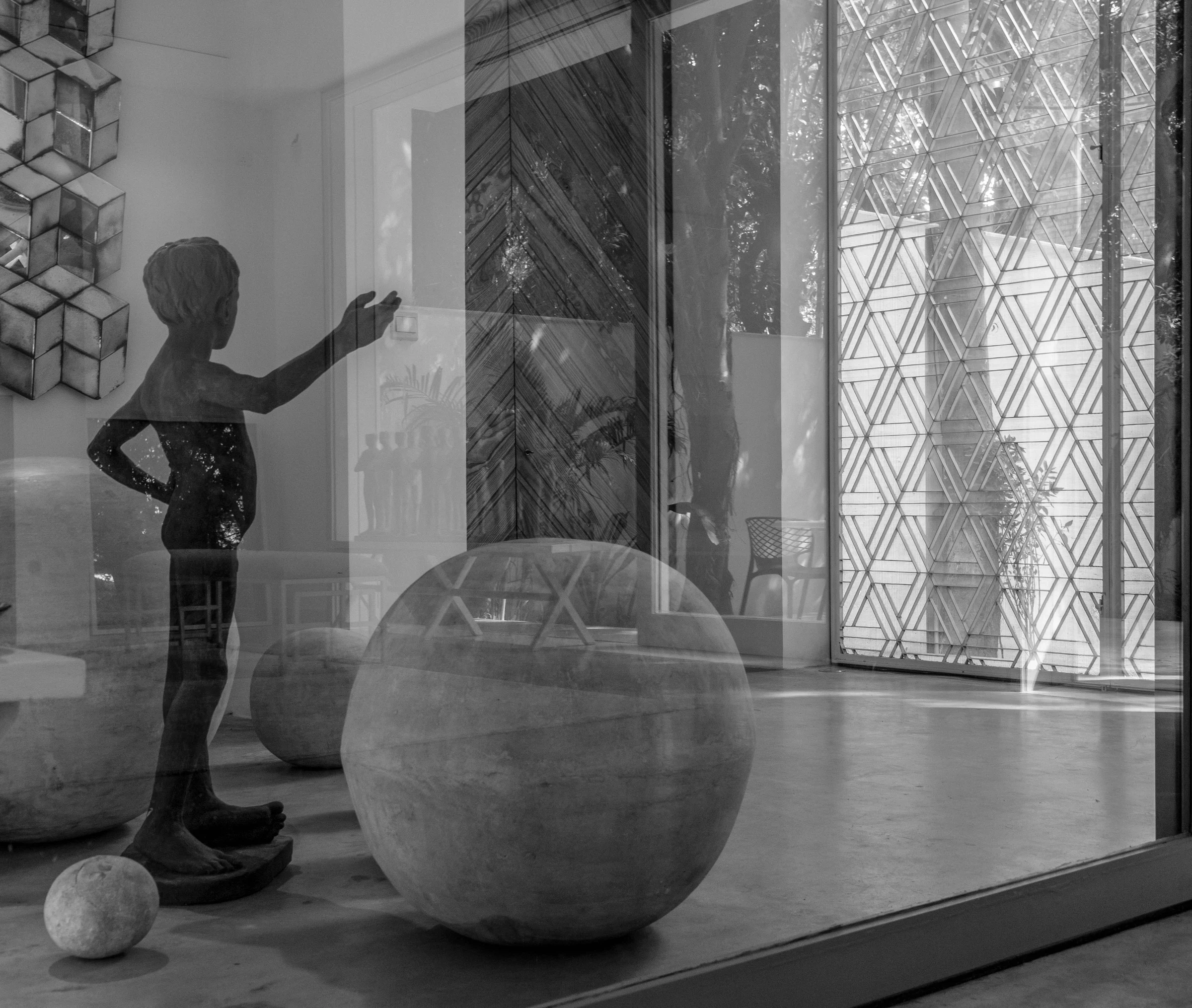
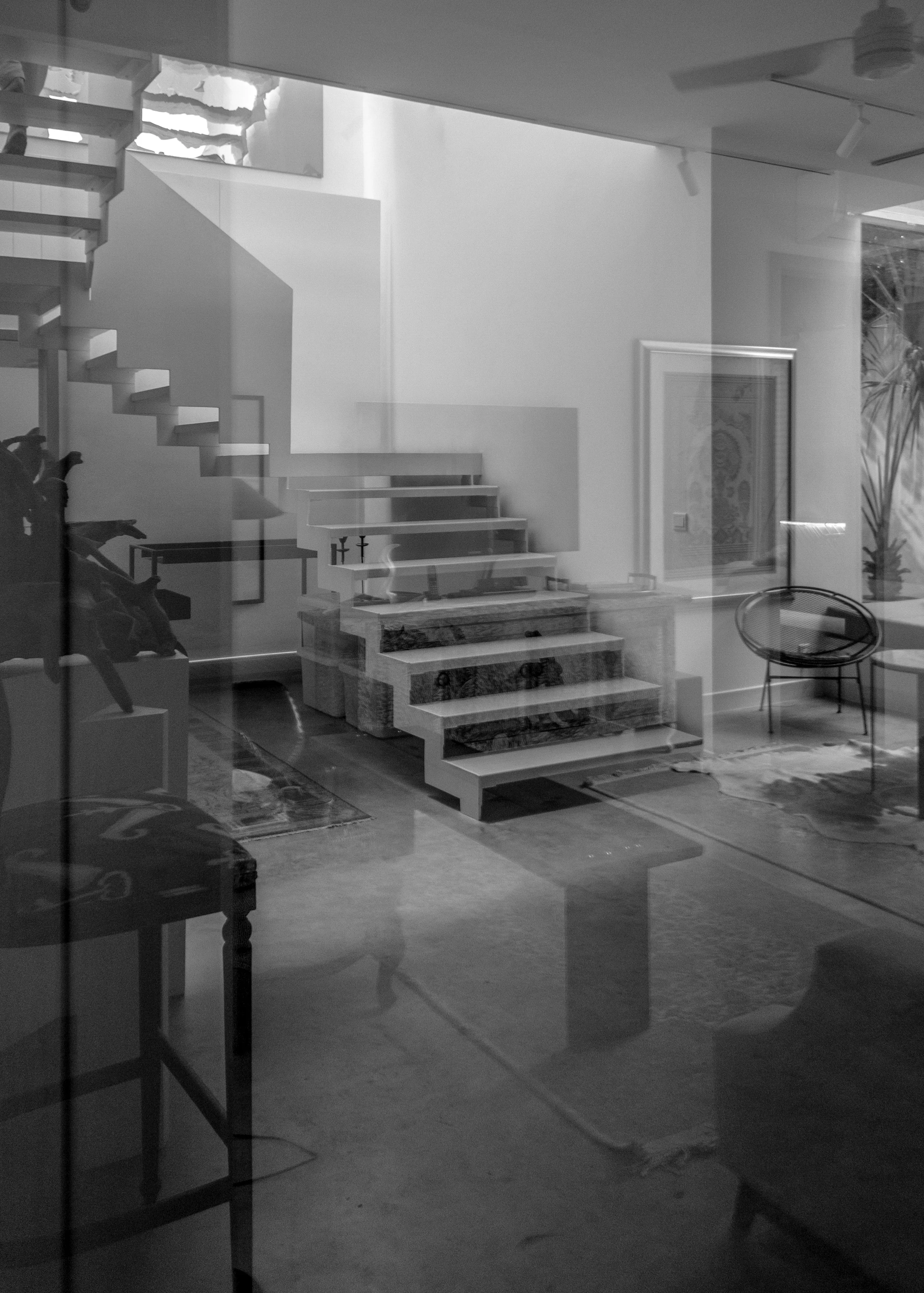
ANK’s Residence in Lahore is a renovation project that emphasizes contemporary minimalism. The ground floor features a large open plan, with long glass doors used to separate spaces while maintaining visual continuity. This design allows one to see from the front to back of the house through layers of glass, creating a sense of infinite space through reflections. The photographs illustrate how elements from different areas reflect into each other, blending the entire house into a unified, expansive environment.
Case Study 3: AK + IQ Residence
Designed by Nayyar Ali Dada and Associates.
This artists’ residence in Lahore is a blend of art, landscape and architecture, reflecting the essence of its inhabitants. The house seamlessly integrates traditional and contemporary elements, creating a living space that is both functional and aesthetically pleasing. The landscape design blurs the boundaries between indoors and outdoors. Inside, their artwork is thoughtfully displayed, enhancing the visual narrative. The use of terrazzo walls in contrast with plain white walls, along with extensive glass surfaces, adds layers of visual texture and depth, crafting a multidimensional experience that resonates with their artistic identity and personal aesthetics.
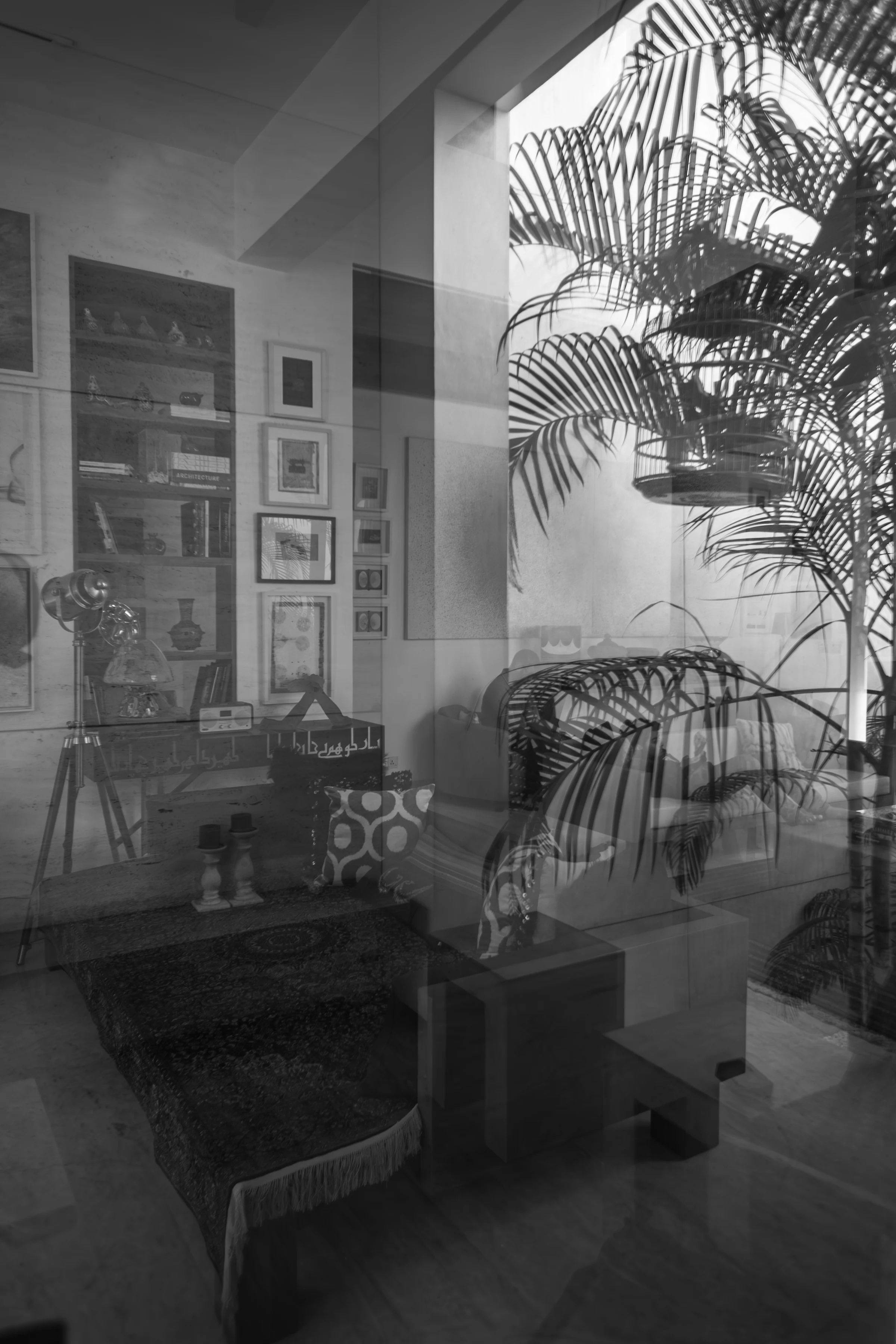
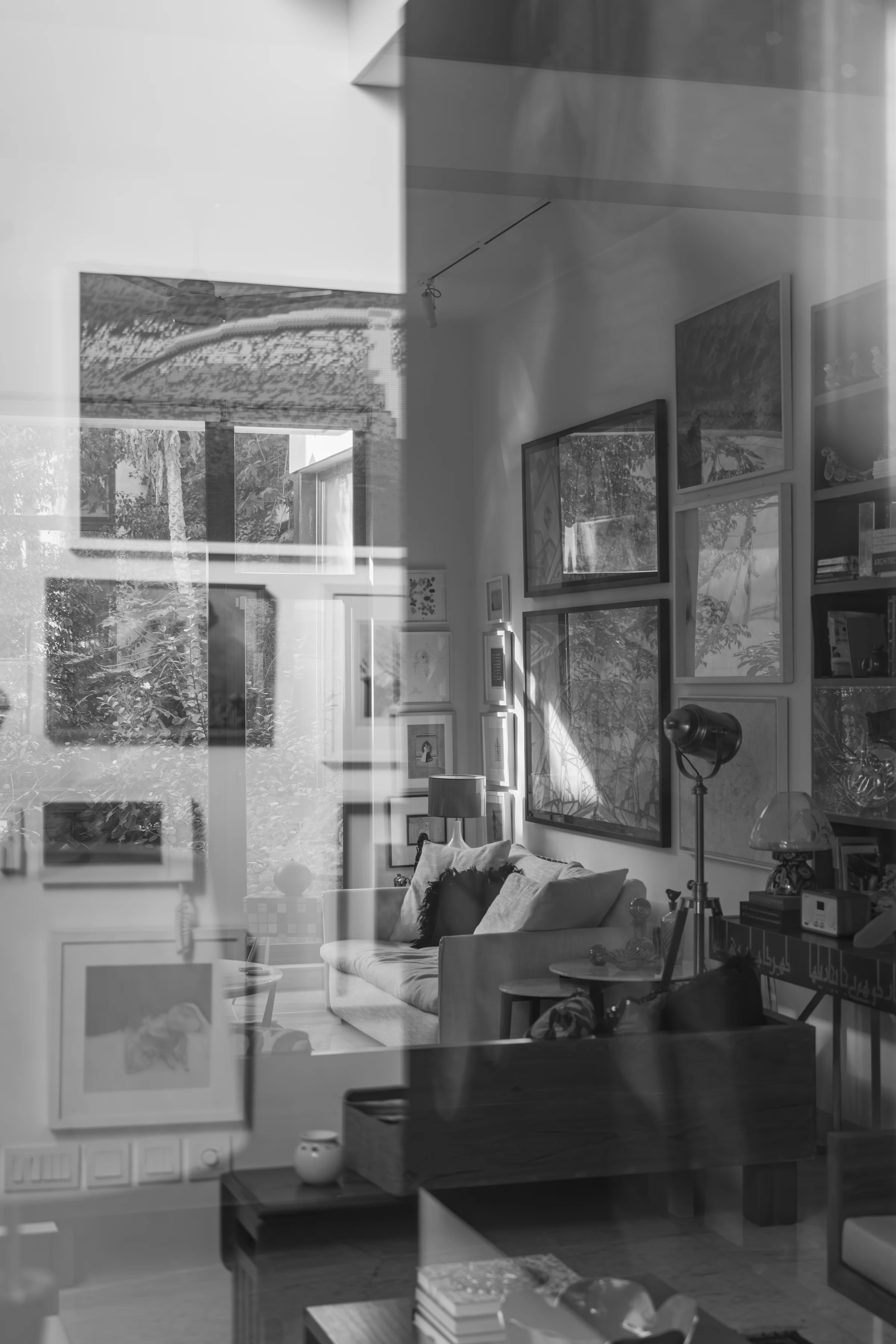
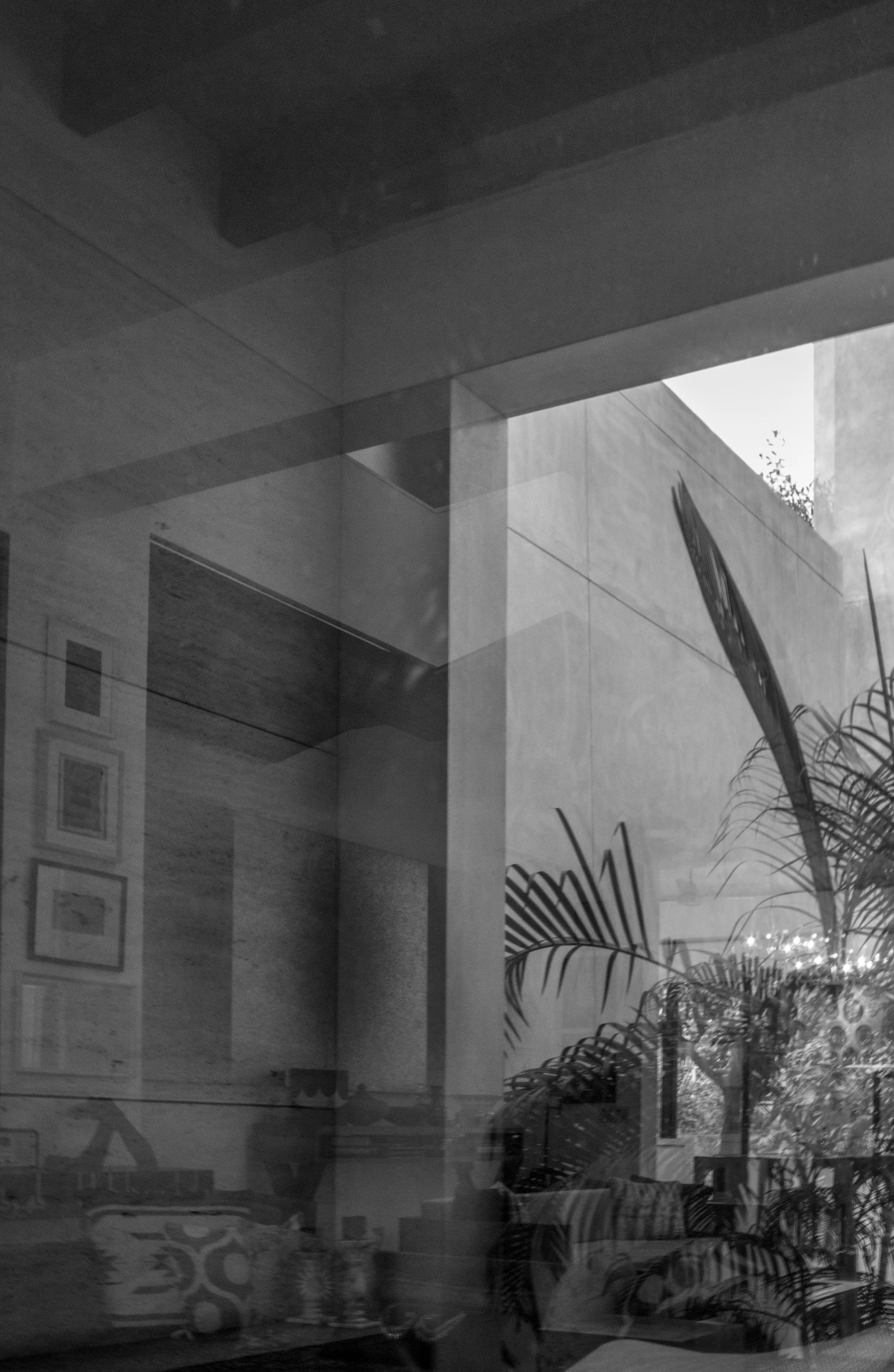
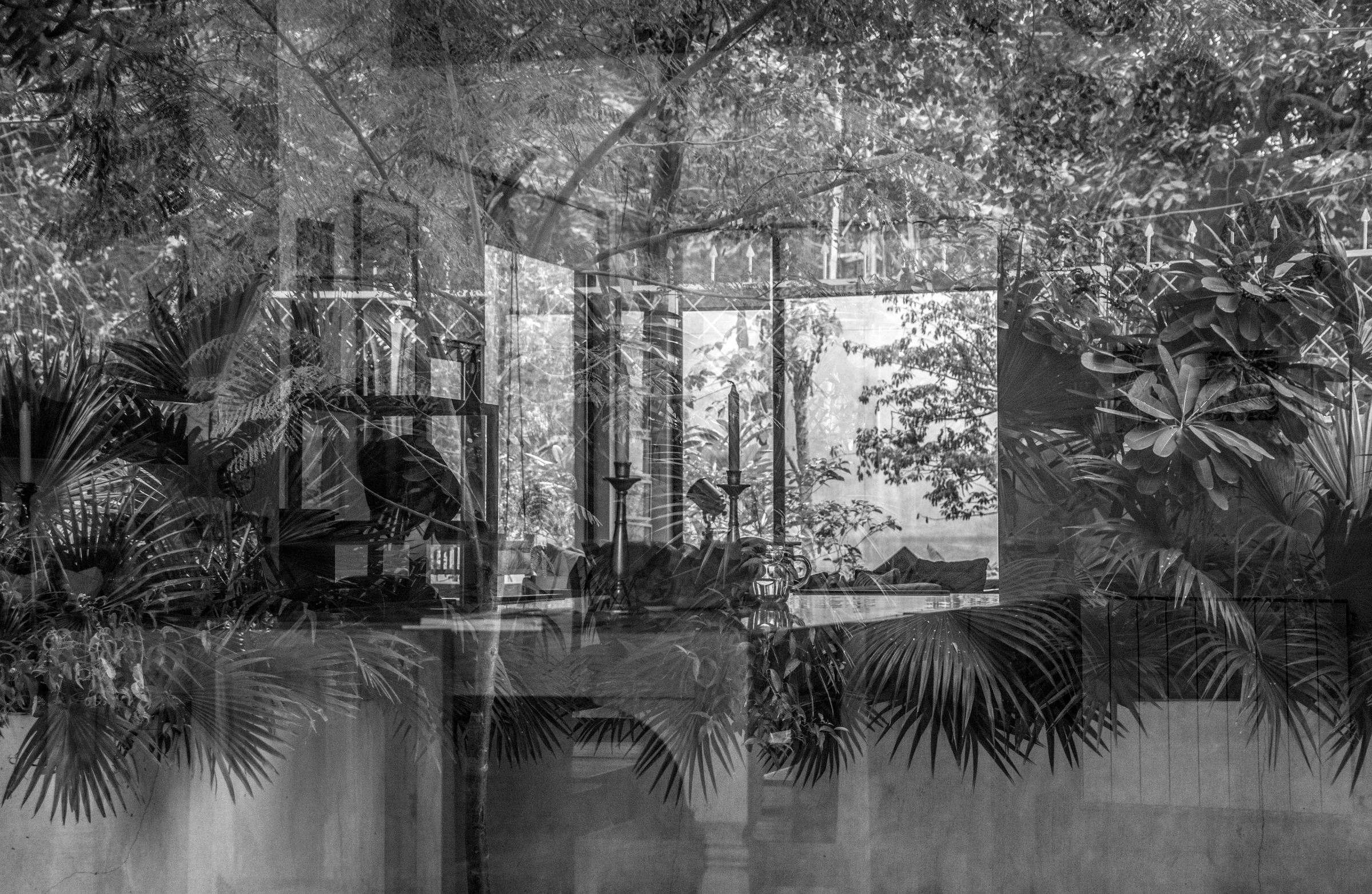
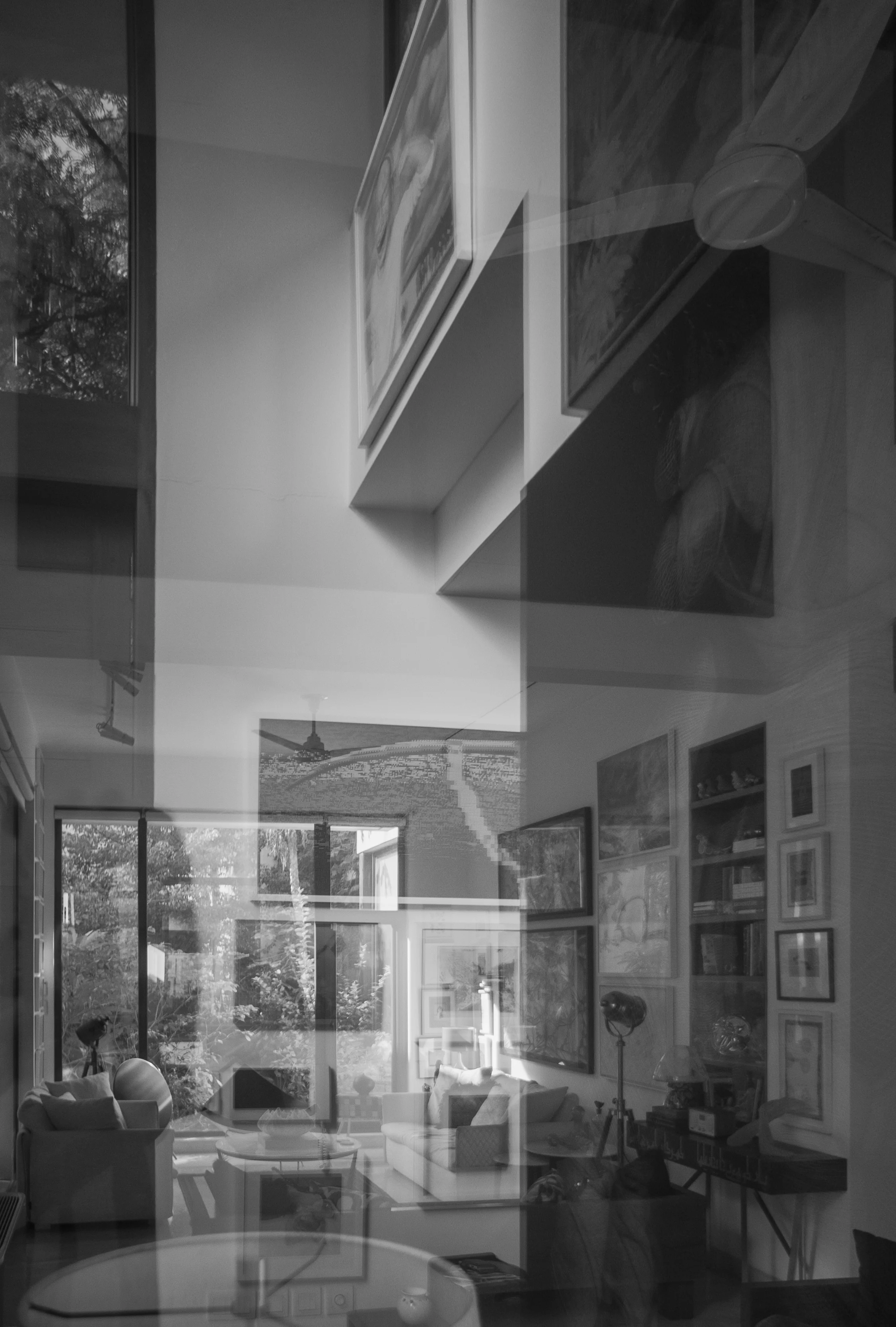
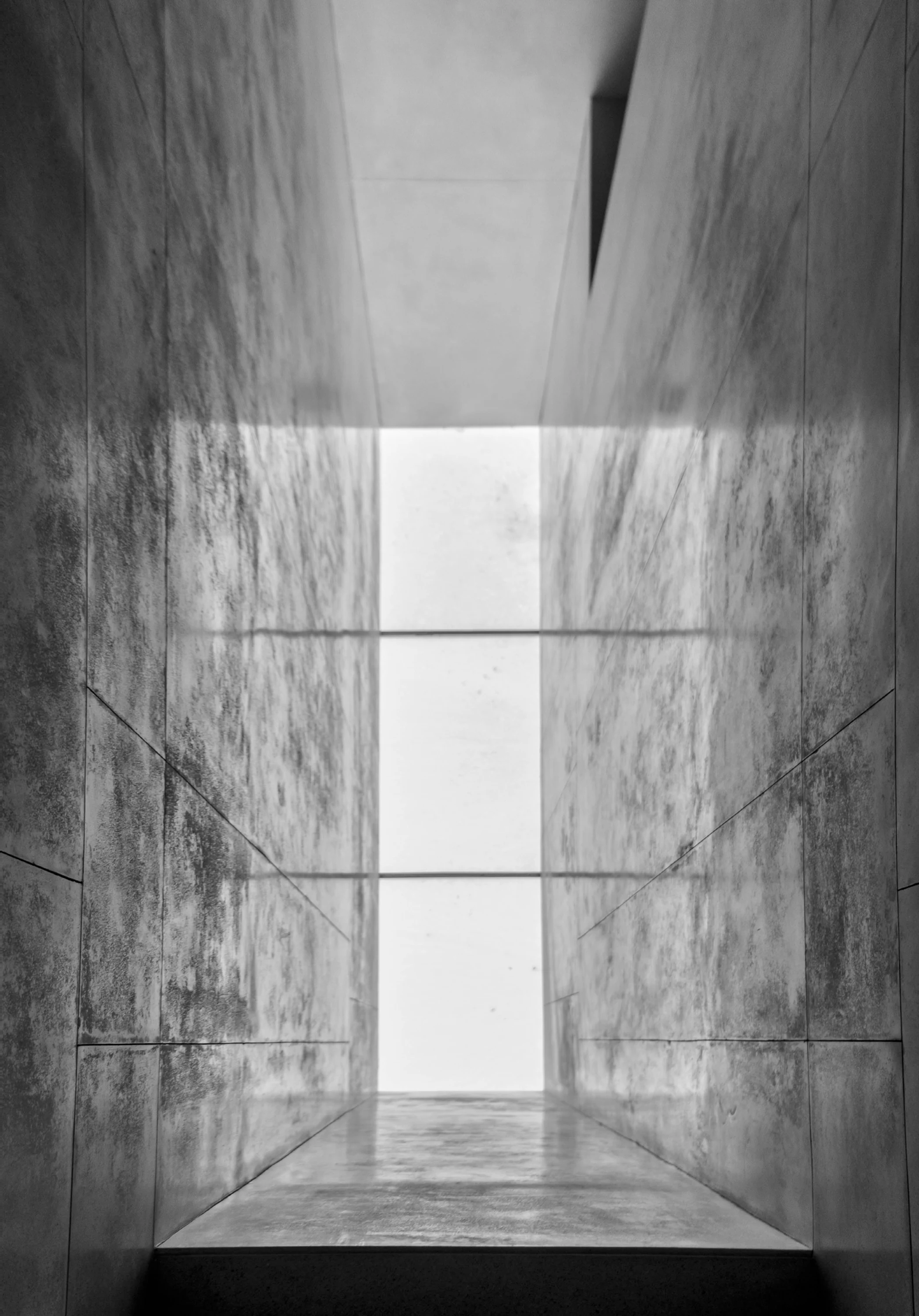
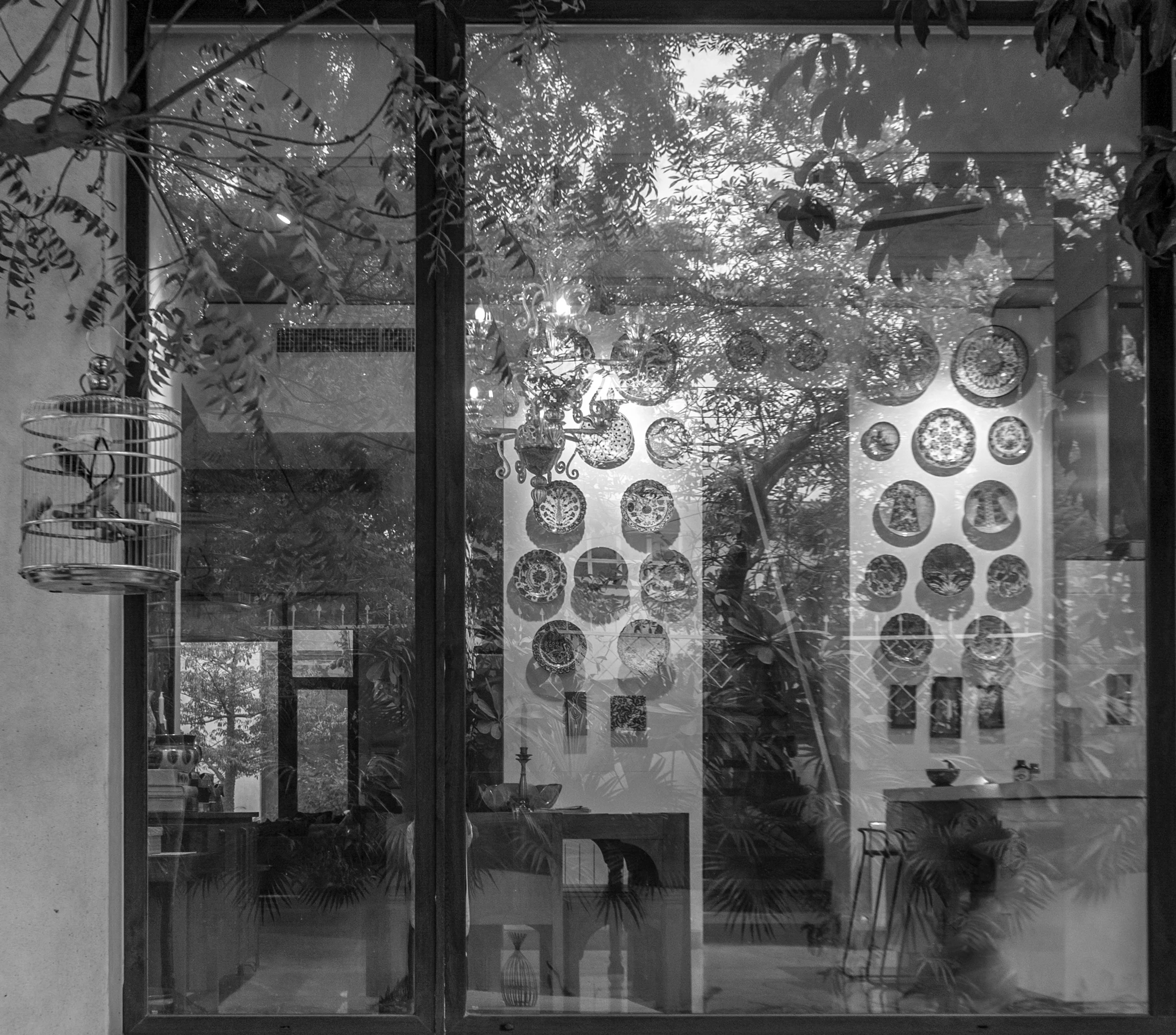
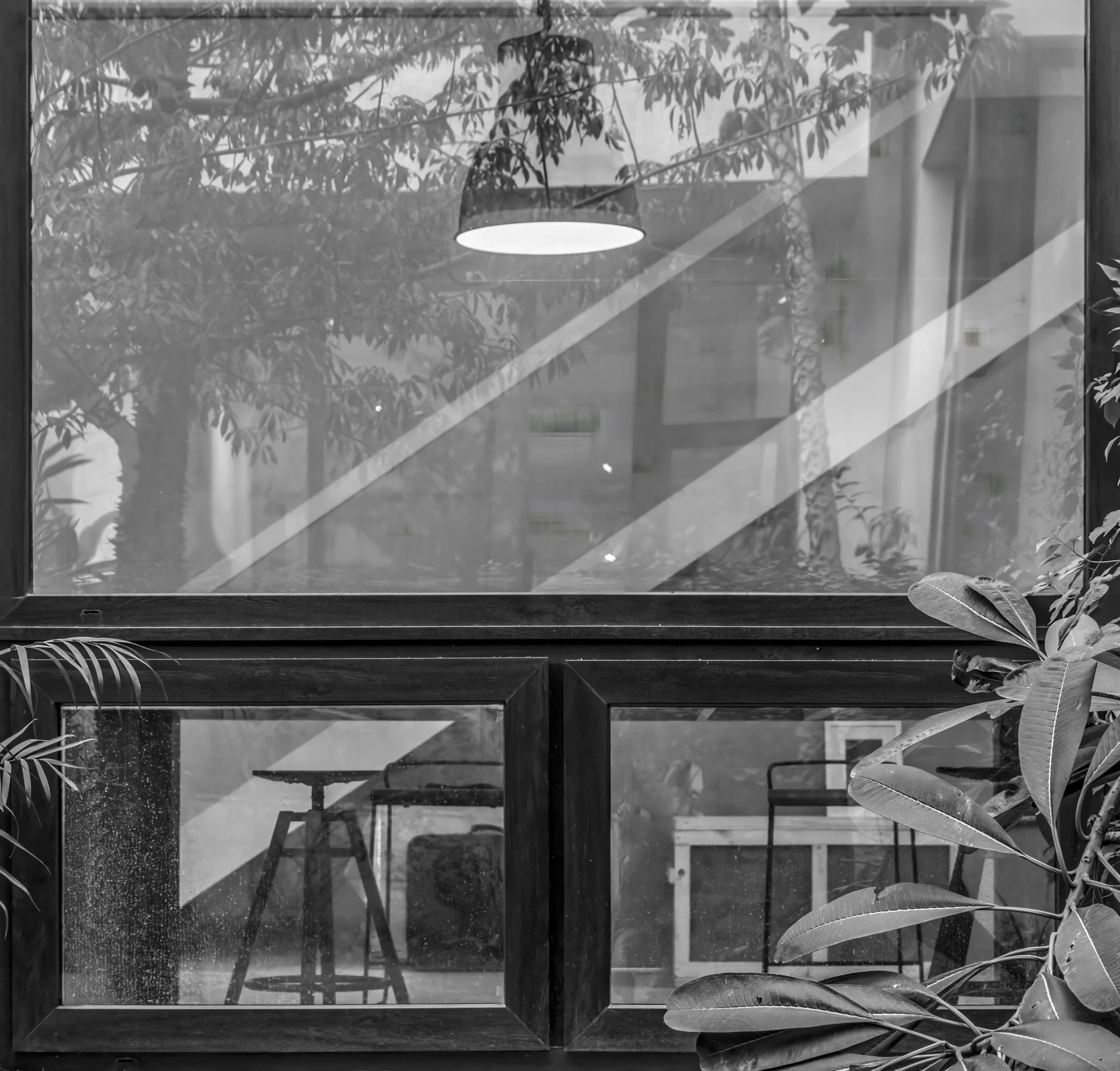
The photographs of these buildings offer a glimpse into our perception of space and its resonance within our minds. They capture how our inner yearnings shape our view of the world. These images, though not direct perceptions, serve as reflections of reality, illustrating how architecture and its elements, light, reflections, materials and design, create profound and lasting impressions on our senses and consciousness. Perhaps this is how images are overlapped in our minds, where each layer of perception builds upon the other, forming a composite reflection of our experiences and desire.
These photographs are presented in their authentic form, reflecting the scenes as they were originally captured. Any adjustments made are minimal, including slight modifications to perspective, contrast, exposure, clarity and colour, ensuring that the images remain true to their original intent and appearance.
- Baker, N., & Steemers, K. (2003). Energy and the Built Environment. Routledge.
- Koolhaas, R. (1995). S, M, L, XL. Monacelli Press.
- Kruft, H.-W. (1994). A History of Architectural Theory. Princeton Architectural Press.
- Harrison, C. (2005). Mythology: The Voyage of the Hero. Penguin Books.
- Kendrick, T. D. (2013). Architecture and the Divine: The Celestial in Built Form. Routledge.
- Pope, A. U. (2016). Persian Architecture: The Triumph of the Timeless. Princeton University Press.